
Urban environments generate vast amounts of heterogeneous and multimodal data, including time series, geospatial imagery, textual reports, and sensor streams. Recent advances in foundation models for language, vision, time series, and geospatial data offer transformative opportunities to better understand, simulate, and optimize cities.
However, applying these models to real-world urban systems poses significant challenges, including heterogeneous data fusion, scalability, interpretability, fairness, and the need to transform model outputs into actionable intelligence for urban planning, mobility, climate resilience, and policy-making.
FM4Urban aims to bridge the gap between theoretical advances in foundation models and their practical impact on urban analytics and intelligence. The workshop brings together researchers, practitioners, and policymakers to discuss cutting-edge research, open challenges, and real-world deployments across the urban domain.
Topics of interest include but are not limited to:
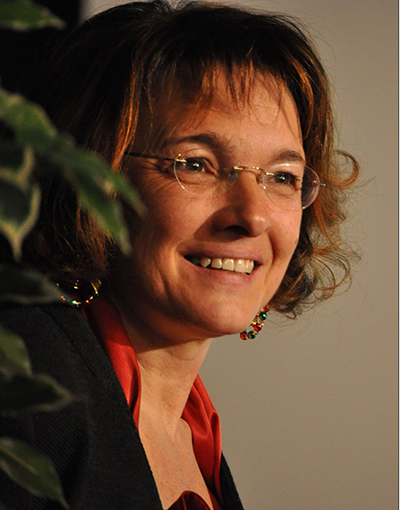
Prof. Maria Antonia Brovelli, Politecnico di Milano
Keynote Title: Foundation Models for Urban Intelligence: Why Geospatial Information Science Matters
Bio: Maria Antonia Brovelli is Professor of GIS and Earth Observation at Politecnico di Milano, where she leads the GEOlab. With a background in Physics and a PhD in Geodesy and Cartography, her research spans geodesy, GIS, open-source geospatial technologies, Citizen Science, Earth Observation, GeoAI and Geospatial Foundation Models. She is Vice President of the International Society for Digital Earth, President of ISPRS Technical Commission of Geospatial Information Science, curator of the UN-ITU geospatial series of AI For Good, former Chair of the UN-GGIM Academic Network. She leads national and international projects on urban resilience, air quality, land cover, disaster management and sustainable development, building on long-standing experience in promoting open geospatial innovation worldwide and in education.
The workshop will take place on 7 September 2026. The schedule below is tentative and may be subject to minor changes.
| Time | Session |
|---|---|
| 09:00–09:20 |
Opening and Introduction Welcome remarks and workshop overview. Explanation of the rules for voting the Best Paper and Best Poster. |
| 09:20–10:00 |
Keynote Foundation Models for Urban Intelligence: Why Geospatial Information Science Matters (slides available)
Speaker: Prof. Maria Antonia Brovelli |
| 10:00–10:30 |
Power Pitches for Poster Session Lightning talks for the visionary, short papers and extended abstracts:
|
| 10:30–11:00 | Coffee Break and Poster Session |
| 11:00–12:00 |
Paper Session Presentations of the full papers: |
| 12:00–12:40 | Panel Discussion |
| 12:40–13:00 | Awards Ceremony and Closing Remarks |
| 13:00–14:00 | Lunch Break |
All deadlines expire on 23:59 AoE
We welcome the following types of submissions:
Papers must be written in English and formatted in LaTeX, following the outline of the author kit Springer LNCS Template Download.
All accepted papers must be presented in person at the workshop.
Post-workshop proceedings will be published by Springer in the Communications in Computer and Information Science (CCIS) series. Authors of accepted full and short papers may choose whether to include their paper in the workshop proceedings.
Submissions must be made through the submission portal.
The workshop adheres to the policies of the ECML PKDD 2026 conference regarding the use of Generative AI tools.
If Large Language Models (LLMs) or other AI tools are used to assist in preparing the paper, they should be employed responsibly to uphold the integrity of the submission. Specifically, when using LLMs to enhance the readability of the text (e.g., for grammar correction or proofreading), authors should be aware that generating text that violates intellectual property rights is plagiarism. The authors have to declare if they used Generative AI to support paper writing and to what extent they used such tools in an appropriate section of the paper. The authors, anyway, take full responsibility and accountability for the submitted paper and for any copyright issues the disclosure of the paper content may raise. Any manipulations in the manuscript intended to cheat the review process are forbidden.
The workshop will include invited talks, peer-reviewed paper presentations, an interactive poster session, and a panel discussion bringing together experts from machine learning, urban science, transportation, and climate research.
To foster community engagement, the workshop will feature interactive voting for Best Paper and Best Poster awards using QR codes during the event.